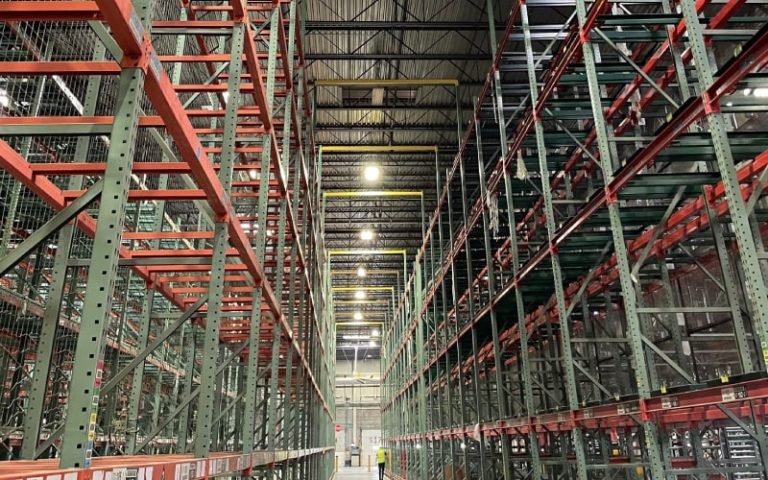
Large warehouse closures generate massive amounts of material. A single facility decommission can yield 2,000+ uprights, thousands of beams, and miscellaneous equipment that took years to accumulate.
For companies closing facilities, the goal is maximizing value recovery while meeting removal deadlines. For buyers, these events create purchasing opportunities that don’t exist in normal market conditions.
Understanding how large-scale decommissioning works helps both sellers and buyers get better outcomes.
The Scale of Major Facility Decommissions
Warehouse decommissions happen at scales most people don’t anticipate until they’re facing one.
A 400,000 to 500,000 square foot facility contains significant racking infrastructure. A million square foot warehouse holds even more. We’re talking about 2,000+ uprights in a single location. Thousands of beams. Miscellaneous material handling equipment accumulated over years of operation.
That’s not a garage sale. That’s an industrial liquidation requiring serious planning and execution.
The materials didn’t arrive overnight. They were purchased, installed, reconfigured, and expanded over the facility’s operating life. Removing them requires reversing that process under deadline pressure.
Why Companies Decommission Large Facilities
Several scenarios drive major warehouse closures.
Lease exits. The lease is ending and renewal doesn’t make sense. The company needs materials removed by a specific date or faces penalties. The timeline is fixed and non-negotiable.
Facility consolidation. Operations are moving to fewer, larger locations. The old facility becomes redundant. Materials either transfer to the new location or get sold.
Downsizing. Business conditions changed. The company over-expanded and now has more capacity than needed. They’re reducing footprint to match current demand.
Relocation. Operations are moving to a different market. Some materials make sense to move. Others cost more to relocate than replace.
Partial downsizing. The company keeps half the facility and needs to remove racking from the other half. They’re right-sizing to current operations while staying in the same location.
Each scenario has different timeline pressures, material disposition goals, and complexity levels.
The Timeline Pressure Sellers Face
Decommissioning timelines are typically fixed by external factors. Lease end dates. New facility opening dates. Corporate consolidation schedules.
Missing the deadline creates real costs. Lease penalties. Delayed facility handover. Disrupted operations at the new location.
That timeline pressure affects negotiating dynamics. Sellers need materials removed by specific dates. They can’t hold out indefinitely for maximum pricing. Getting the facility cleared on schedule matters more than extracting every dollar of value.
Buyers who understand this dynamic recognize the opportunity. Motivated sellers with fixed deadlines create favorable purchasing conditions.
What Materials Come Out of Large Decommissions
Pallet racking represents the primary material category. Uprights, beams, wire decking, and related components. This is the highest-value, most marketable material from most warehouse closures.
But large facilities contain more than racking.
Miscellaneous material handling equipment accumulates over years of operation. Forklifts, pallet jacks, conveyors, and specialty equipment. Some has resale value. Some is worn out.
Office furniture and fixtures from administrative areas. Break room equipment. Signage. Security systems. All the infrastructure that supported daily operations.
The racking has the clearest path to resale value. It’s standardized, in demand, and works across industries. The miscellaneous items require more effort to liquidate with less predictable returns.
How Decommissioning Creates Small Order Opportunities
Here’s something most people don’t realize about large decommissions.
When a single facility closure generates 2,000+ uprights, that inventory base enables small orders that wouldn’t otherwise be economical.
Someone needs four uprights and eight beams for a small facility or garage. That’s not a viable order to fulfill through normal channels. The handling costs, coordination, and shipping eat up any margin.
But when you have 2,000 uprights sitting in inventory from a major decommission, fulfilling that small order becomes simple. The material is already there. Someone can come pick it up. You can put small quantities on Facebook Marketplace and move miscellaneous items.
The large project creates the inventory base that makes small sales possible. Without major decommissions feeding inventory, small orders don’t work economically.
The Garage Sale Model for Facility Closures
Think of a major decommission as a massive garage sale.
You have 2,000 uprights of racking. You also have miscellaneous equipment, furniture, and random items accumulated over years. Some of it has clear value. Some of it you just need gone.
The primary materials sell through normal commercial channels. Racking goes to buyers who need warehouse infrastructure.
The miscellaneous items move through different channels. Facebook Marketplace works for smaller items. Local pickup sales for equipment that’s not worth shipping. Bulk lots for items that need to move quickly.
The goal is maximizing total value recovery while meeting the removal deadline. That means different strategies for different material categories.
Geographic Impact of Large Decommissions
A major facility closure changes the local market dynamics.
Before the decommission, used racking availability in that region might be limited. Small orders are hard to fulfill. Buyers have fewer options.
After the decommission, there’s suddenly significant inventory available locally. Small orders become viable. Pricing reflects the increased supply.
This is why geographic location matters for used racking purchases. Markets with recent large decommissions have better availability and often better pricing. Markets without recent closures have constrained supply.
If you’re buying used racking, ask whether your supplier has recent decommissioning inventory in your region. The answer significantly affects what they can offer you.
The Buyer Opportunity in Decommissioning Events
For companies looking to buy racking, decommissions create unique opportunities.
Volume availability. You can source large quantities from a single location. A 2,000-upright decommission can supply multiple buyer projects.
Motivated sellers. Companies closing facilities need materials removed on schedule. They’re not holding out for maximum pricing. They’re prioritizing facility clearance.
Negotiating leverage. Your ability to take larger quantities or accommodate tighter removal timelines strengthens your position. The seller values speed and certainty.
Pricing advantages. The combination of motivated sellers and volume availability often produces better pricing than normal market transactions.
The challenge is timing. Decommissions don’t happen on predictable schedules. You can’t plan your warehouse expansion around hoping a facility closure becomes available in your market.
But when they do happen, being positioned to act quickly creates advantages.
What Sellers Should Know About Maximizing Value
If you’re closing a facility, several factors affect how much value you recover.
Timeline flexibility matters. The more time you have, the better pricing you can negotiate. Rushed timelines mean accepting whatever offers are available.
Material condition affects value. Well-maintained racking in good condition commands better prices. Damaged, modified, or poorly maintained materials get discounted.
Documentation helps. Knowing manufacturer specifications, load capacities, and installation dates makes materials easier to sell. Buyers want to know what they’re getting.
Quantity creates leverage. Large volumes attract serious buyers who can handle the scale. Small quantities attract fewer interested parties.
Removal coordination is part of the deal. Buyers need to get materials out of your facility. Clear access, loading capabilities, and coordination support make your project more attractive.
The Role of Decommissioning Specialists
Companies that specialize in warehouse decommissioning handle the entire process.
They assess the facility and materials. They provide offers for the racking and equipment. They coordinate removal labor. They handle the logistics of getting materials out on schedule.
For sellers, this simplifies a complex project. You’re not managing material sales, buyer coordination, and removal logistics separately. One relationship handles the entire decommission.
For the decommissioning company, the project creates inventory that feeds future sales. The 2,000 uprights from your facility become the supply that serves their customers for months.
The alignment works because both parties benefit from efficient execution. You get your facility cleared on schedule. They get inventory to sell.
Partial Decommissions and Right-Sizing
Not every project involves closing an entire facility. Some companies need to remove racking from part of their space while continuing operations in the rest.
Partial decommissions add complexity. You’re working around active operations. Materials need to come out without disrupting ongoing business.
The scenarios vary. Maybe you’re returning half your leased space. Maybe you’re reconfiguring for different storage needs. Maybe you over-expanded and need to right-size.
These projects require more coordination than full facility closures. The timeline might be more flexible, but the operational constraints are tighter.
Market Conditions Affect Decommissioning Outcomes
The broader market influences what sellers can expect from decommissioning projects.
During the 2020-2021 period, used racking was scarce. Decommissioning opportunities were rare and highly competitive. Sellers could command premium prices.
By 2024, nine out of ten leads were from companies looking to sell or decommission. The market had abundant supply. Sellers faced more competition and buyer-favorable pricing.
Current conditions still show significant decommissioning activity. Companies that over-expanded during the boom continue working through consolidations. That ongoing supply supports the used materials market.
If you’re planning a decommission, understanding current market conditions helps set realistic expectations for value recovery.
Frequently Asked Questions
How long does a large warehouse decommission typically take?
Timeline depends on facility size, material volume, and removal complexity. A straightforward 400,000-500,000 square foot facility might take several weeks for material removal once buyer arrangements are finalized. The sales process and negotiation add time before removal begins. Partial decommissions working around active operations take longer due to coordination requirements.
What’s the typical value recovery on racking from a facility closure?
Value depends on material condition, market conditions, and timeline pressure. Well-maintained racking in a buyer-favorable market with reasonable timeline flexibility recovers more value. Rushed timelines with damaged materials in oversupplied markets recover less. Expect significant variation based on these factors rather than a standard percentage.
Can I sell racking from a facility closure myself or do I need a specialist?
You can sell directly to buyers, but it requires finding qualified purchasers, negotiating deals, and coordinating removal. Decommissioning specialists handle this process and bring established buyer relationships. For large facilities, the coordination complexity usually justifies working with specialists. For smaller projects, direct sales might work.
What happens to materials that don’t sell from a decommission?
Lower-value or unsaleable materials typically get scrapped or disposed of. The goal is maximizing value from marketable items while efficiently clearing everything else. Some miscellaneous equipment finds buyers through channels like Facebook Marketplace. Items with no resale value get removed as part of facility clearance.
How do decommissioning timelines align with lease end dates?
Ideally, you start the decommissioning process months before your lease ends. This provides time to market materials, negotiate with buyers, and complete removal without deadline pressure. Starting too late creates rushed timelines that reduce value recovery and increase stress. Build decommissioning into your facility exit planning early.
Does the decommissioning company pay me or do I pay them?
For facilities with valuable racking and equipment, decommissioning companies typically pay for the materials. They’re acquiring inventory they can resell. For facilities with limited valuable materials or significant removal costs, the arrangement might involve charges for removal services. The balance depends on material value versus removal complexity.
What documentation should I have ready for a facility decommission?
Gather manufacturer information, specifications, and load capacities for racking systems. Installation dates and maintenance records help establish material history. Facility layouts showing racking locations assist with assessment and removal planning. The more documentation you provide, the easier the evaluation and sales process.
Can I keep some racking and sell the rest during a decommission?
Yes, partial sales are common in consolidation and right-sizing scenarios. You identify what you need to keep for ongoing operations or transfer to new locations. The remaining materials get sold through the decommissioning process. Clear communication about what’s included in the sale prevents confusion.
Key Takeaways
Large facility closures generate massive material volumes. A single 400,000 to 1,000,000 square foot decommission can yield 2,000+ uprights and thousands of related components. These aren’t small transactions.
Timeline pressure creates buyer opportunities. Sellers facing fixed lease deadlines or corporate schedules prioritize facility clearance over maximum pricing. Buyers who can accommodate timelines and take volume gain negotiating leverage.
Decommissions enable small orders that wouldn’t otherwise work. The 2,000-upright inventory from a major facility closure makes it economical to fulfill four-upright orders for small buyers. Large projects feed small sales.
Geographic market dynamics shift with major closures. Regions with recent decommissions have better used material availability and often better pricing. Markets without recent activity have constrained supply.
Market conditions affect value recovery. The same materials yield different returns depending on supply-demand balance. Current conditions with high decommissioning activity favor buyers over sellers compared to the 2020-2021 scarcity period.
Partial decommissions add complexity but offer flexibility. Right-sizing scenarios require coordination around active operations but may provide more timeline flexibility than full facility closures.
Documentation and material condition directly impact value. Well-maintained racking with clear specifications commands better pricing than damaged materials with unknown history.
Pallet Racking Removal Glossary: Every Term You Need to KnowHow Much Does Pallet Racking Cost? New, Used, and Installation PricingUsed vs. New Pallet Racking: When Each Option Makes Financial Sense
Ted Hodges - CEO & Founder
Ted Hodges is the Founder and CEO of Conesco Storage Systems, a company he started in 1986 to provide turnkey warehousing products and services, including the repurposing of quality, used material handling equipment. With over 40 employees across the country, Ted and his team serve customers of all sizes throughout the different stages of the warehousing lifecycle.