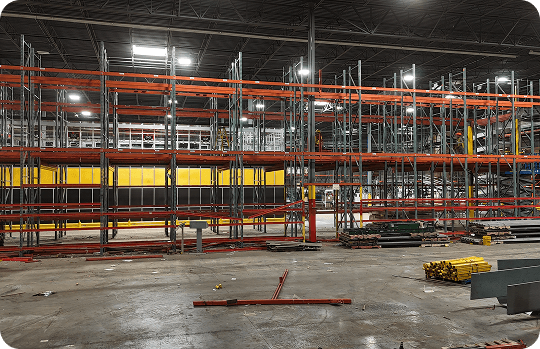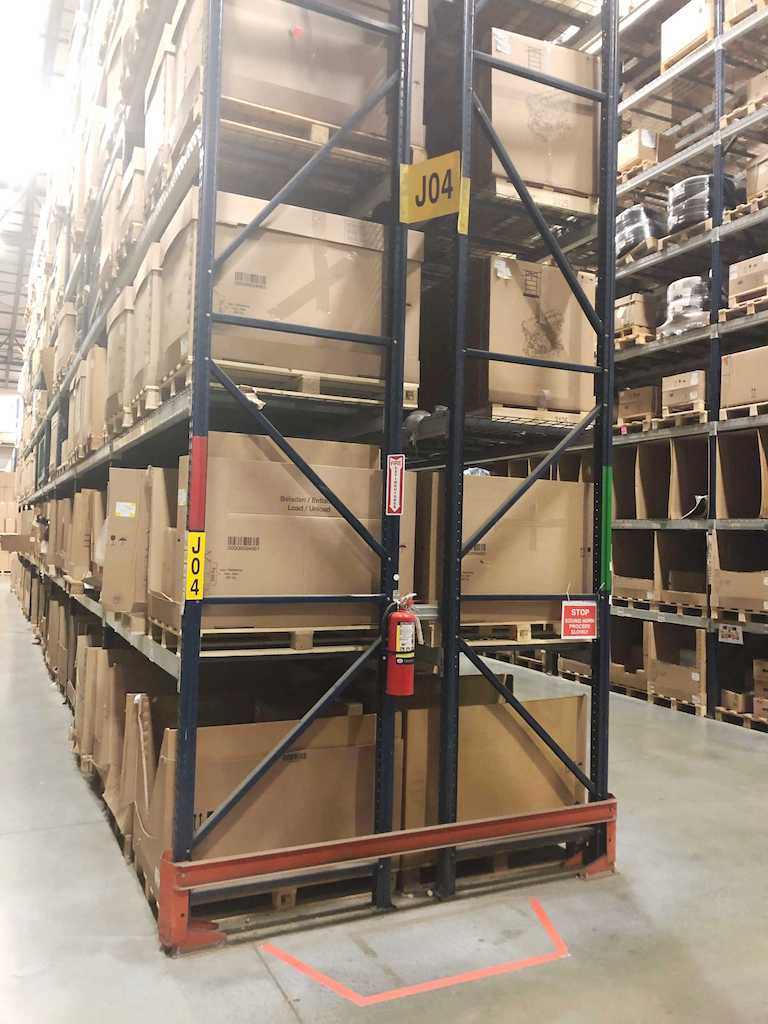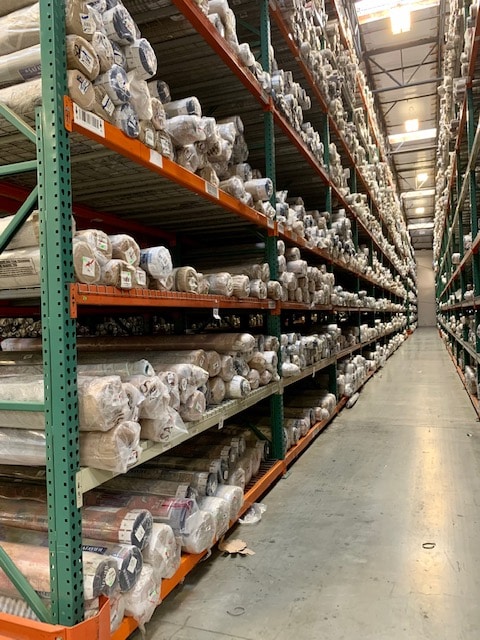
If you’re planning a warehouse teardown, decommission, or liquidation, you’re going to hear a lot of terms fast. Rack buyback. Floor patching. Teardown service. Pick module. Some of it is self-explanatory. A lot of it isn’t — especially if this is your first time managing a removal project.
This glossary covers every major term you’ll encounter. It’s organized by topic so you can find what you need based on where you are in the project, not just alphabetically. Whether you’re getting a first quote or finalizing a contractor scope, knowing this language helps you ask better questions and avoid surprises.
Rack Components
These are the physical parts that make up a pallet rack system. Knowing what each piece is called matters when you’re reviewing quotes, sorting material for resale, or verifying what’s been removed.
Upright
The vertical frame of a pallet rack system. Uprights support the beams, carry the load, and are anchored directly to the concrete floor. They’re one of the highest-value components in a used racking resale.
Beam
The horizontal steel member that connects two uprights and holds the pallet load. During removal, beams are detached, sorted, and staged for resale, reuse, or scrap depending on condition.
Floor Anchor
The fastener that secures a rack upright to the concrete slab. Anchors are removed or cut during teardown, and the resulting holes in the floor are patched afterward.
Wire Decks / Wire Decking
Metal decking panels that sit on rack beams to support pallets or cartons. Wire decks are common in used rack inventory and are typically counted, sorted, and valued separately from uprights and beams.
Pallet Supports
Steel support bars placed between rack beams to carry pallet loads. They’re removed, counted, and sorted as part of the dismantling process and can be resold with the rack system.
Pallet Rack Accessories
The add-on parts used to protect, support, or extend a rack system. Common examples include netting, guide rails, guard rails, wire decks, and pallet supports. Accessories are usually inventoried and sorted during teardown.
Rack Accessories and Safety Components
These parts are attached to the rack system but serve protective or support functions. They’re often removed and resold alongside the primary racking.
Guide Rail
A rack accessory that helps control equipment movement and reduce impact risk near pallet racking. Guide rails are removed during teardown and may be reused or sold.
Guard Rail
A protective barrier installed around racking or warehouse equipment to reduce forklift and traffic damage. Guard rails are typically removed during a full teardown or facility clearance.
Netting
A safety accessory that stops stored items from falling off the back or sides of a rack system. Netting is removed with the racking during dismantling.
Rack System Types
Not all racking is the same. The type of system in your facility affects removal complexity, resale value, and project timeline.
Pallet Racking
The standard steel warehouse storage system designed to hold palletized inventory on upright frames and horizontal beams. It’s one of the most common forms of industrial storage used in warehouses and distribution centers.
Selective Pallet Racking
The most common rack type in warehouses. Selective racking gives direct access to each pallet position, which makes it straightforward to dismantle and highly sought after in the used market.
Cantilever Rack
A storage system built for long, bulky, or irregular materials like lumber, pipe, or bar stock. Cantilever rack differs structurally from standard pallet racking and may be included in broader warehouse liquidation or decommission projects.
Pick Module
A multi-level warehouse structure that can combine shelving, rack, stairs, platforms, and conveyor sections to support order picking. Pick modules are more complex to dismantle than standard rack systems and are often relocated or sold as part of a larger equipment liquidation.
Industrial Storage Systems
A broad term for warehouse racking, shelving, mezzanines, and related structures used to store inventory and materials. It’s typically used when a facility includes more than one storage type.
Mezzanine
An elevated steel platform built inside a warehouse to create extra floor space for storage, picking, or work areas. Mezzanines are often removed, sold, or relocated during decommission projects and require their own removal planning separate from floor-level racking.
Removal and Teardown Process
These terms describe the actual work of taking a rack system apart. They come up constantly in contractor quotes, project scopes, and removal timelines.
Pallet Racking Removal
The process of dismantling and clearing pallet rack systems from a warehouse. The work can include labor, equipment, anchor removal, cleanup, resale sorting, and site preparation.
Pallet Rack Tear Down
The step-by-step disassembly of a pallet rack system for removal, resale, relocation, or disposal. Used interchangeably with “rack dismantling” and “pallet racking removal.”
Rack Dismantling
The process of taking apart pallet racking or warehouse shelving in a safe, planned sequence. The sequence matters — improper dismantling can damage components and reduce resale value.
Teardown Service
The full labor and project work involved in dismantling warehouse racking, shelving, and equipment. A teardown service typically includes planning, disassembly, staging, cleanup, and preparation for resale, removal, or disposal.
Rack Removal Contractor
A company that handles the labor, equipment, safety planning, and site cleanup needed to remove pallet racking or warehouse storage systems. Choosing a contractor with buyback capabilities can offset project cost.
Operating Warehouse
A facility that is still active while removal or teardown work is taking place. Projects in operating warehouses require tighter scheduling, phasing, and safety controls to avoid disrupting ongoing operations.
Timeline
The projected schedule for completing a warehouse removal or teardown project. The length depends on material volume, installation type, equipment mix, and whether the building is still active during work.
Facility and Project Terms
These describe the broader context and trigger events that lead to a racking removal project.
Decommission
Taking a warehouse, storage system, or equipment setup out of service in an organized way. This can include rack removal, equipment removal, cleanup, and floor repair before turnover, relocation, or closure.
Warehouse Decommissioning
The full process of taking a warehouse or part of a warehouse out of service. It can include equipment removal, rack dismantling, site cleanup, disposal, and preparation for a move, closure, or new tenant.
Warehouse Shutdown
The process of closing down operations in a facility before turnover, relocation, or liquidation. It usually involves planning, equipment removal, rack teardown, cleanup, and disposal.
Warehouse Teardown
The structured dismantling of racking, shelving, and equipment inside a warehouse. The term covers the labor, sequencing, safety controls, and cleanup required to clear the site.
Warehouse Clear-Out
The removal of racking, shelving, equipment, debris, and leftover materials to prepare a facility for closure, turnover, sale, or a new tenant.
Warehouse Downsizing
The reduction of storage space, equipment, or operational footprint within a facility. This often leads to partial rack removal or selective equipment liquidation rather than a full teardown.
Distribution Center
A warehouse facility used to receive, store, sort, and ship inventory. When a distribution center closes, moves, or changes layout, pallet rack removal is often a major part of the project scope.
Relocation
The process of moving warehouse storage systems or equipment from one facility to another. Rack removal is typically the first stage before transport and reinstallation at the new site.
Buyout and Liquidation Terms
These terms come up when there’s resale or recovery value in the equipment being removed. Understanding them helps you evaluate what your racking is worth and what to expect from a buyout offer.
Equipment Buyout
The purchase of used warehouse equipment as part of a shutdown, liquidation, or removal project. This can include pallet racking, mezzanines, conveyor systems, and other material handling equipment.
Rack Buyback
The purchase of used pallet racking from a warehouse that is closing, downsizing, relocating, or reconfiguring. A rack buyback is often part of a larger liquidation or warehouse cleanout project.
Warehouse Liquidation
The sale and removal of warehouse assets when a facility closes, downsizes, or changes operations. It often includes pallet racking, shelving, mezzanines, conveyors, and other used warehouse equipment.
Surplus Warehouse Equipment
Storage or handling equipment that is no longer needed and is available for resale, buyout, or removal. Surplus equipment commonly surfaces during downsizing, shutdowns, or layout changes.
Used Pallet Racking
Pre-owned rack material that still has reuse or resale value after removal. It may include uprights, beams, wire decks, pallet supports, and related accessories.
Used Warehouse Equipment
Previously installed storage systems, machines, and accessories that still have resale or reuse value. This can include pallet racking, conveyors, mezzanines, pick modules, lift equipment, and shelving.
Used Industrial Shelving
Pre-owned warehouse shelving that can be removed, resold, reused, or reconfigured. It’s different from pallet racking but is often handled in the same warehouse teardown project.
Equipment Types Beyond Racking
Rack systems rarely sit alone in a facility. These terms cover the other equipment that typically comes up in removal and liquidation projects.
Conveyor System
Equipment that moves cartons, pallets, or products through a warehouse or distribution center. Conveyor systems may be dismantled, removed, sold, or relocated as part of a larger warehouse removal project.
Lift Equipment
The category of warehouse machines used to move, raise, or place inventory and materials. This can include forklifts, pallet jacks, order pickers, and scissor lifts.
Material Handling Equipment
A broad category that includes the storage systems, machines, and support equipment used to move, store, protect, and organize products in a warehouse. Pallet racking, conveyors, mezzanines, lift equipment, and shelving all fall under this term.
Warehouse Shelving
A storage system used for cartons, parts, or hand-loaded inventory rather than palletized loads. Warehouse shelving is often removed or sold along with pallet racking during a cleanup or liquidation.
Post-Removal and Site Work
Once the racking is down, the work isn’t done. These terms cover the final steps before a site is ready for turnover.
Site Cleanup
The work done after equipment or racking is removed to leave the warehouse clean, clear, and ready for turnover or the next use. It can include sweeping, debris removal, anchor cleanup, and floor patching.
Floor Anchor Removal
The extraction, cutting, or grinding of the fasteners that held rack uprights to the concrete. Anchor removal is standard in full rack teardowns and precedes floor patching.
Floor Patching
The repair of anchor holes, surface damage, or exposed floor areas after racking and equipment are removed. Proper floor patching helps prepare the warehouse for turnover, reuse, or renovation.
Cement Epoxy
The material used to patch and fill anchor holes left in concrete after rack anchors are removed. It leaves the floor safer and more usable after teardown work is complete.
Debris Disposal
The removal and discarding of leftover material from a warehouse teardown — broken parts, unusable steel, packaging waste, and damaged components. Debris disposal is usually one of the final steps in a clean warehouse shutdown.
FAQs
What is pallet racking removal?
Pallet racking removal is the process of dismantling and clearing pallet rack systems from a warehouse. The work typically includes labor, lift equipment, anchor removal, site cleanup, and sorting material for resale or disposal.
What is the difference between rack dismantling and a teardown service?
Rack dismantling refers specifically to the disassembly process. A teardown service is broader and usually includes planning, dismantling, staging, cleanup, and preparation for resale or disposal — essentially the full project scope.
What happens to the concrete floor after racking is removed?
Anchor holes are patched using cement epoxy after floor anchors are removed or cut. Depending on project requirements, additional floor patching may be done to prepare the space for turnover or reuse.
What is a rack buyback?
A rack buyback is when a buyer purchases your used pallet racking as part of a removal project. It offsets your project cost and eliminates the need to manage resale yourself. The buyer typically handles dismantling and removal.
What is warehouse liquidation?
Warehouse liquidation is the sale and removal of warehouse assets — racking, shelving, mezzanines, conveyors, and other equipment — when a facility closes, downsizes, or changes operations.
How is an operating warehouse removal different from a closed facility?
Projects in operating warehouses require phased scheduling and tighter safety controls to avoid disrupting active operations. Closed facility projects are typically faster and simpler to sequence.
What is the difference between pallet racking and warehouse shelving?
Pallet racking holds palletized loads on beams and uprights. Warehouse shelving is designed for hand-loaded items like cartons or parts. Both are commonly removed and sold together in a liquidation or teardown project.
What is a pick module?
A pick module is a multi-level structure combining rack, shelving, stairs, platforms, and sometimes conveyor sections to support order picking. It requires more complex planning to dismantle than standard floor-level racking.
What is surplus warehouse equipment?
Surplus warehouse equipment is storage or handling equipment that is no longer needed and is available for resale, buyout, or removal. It commonly surfaces during downsizing, shutdowns, or facility layout changes.
What does site cleanup include after racking removal?
Site cleanup typically includes sweeping, debris removal, anchor cleanup, floor patching, and general clearance work to leave the warehouse ready for turnover, a new tenant, or the next phase of renovation.
Key Takeaways
- Rack removal projects involve far more than just taking racking down — anchors, floor repair, debris disposal, and site prep are all part of the scope
- Knowing the difference between teardown service, rack dismantling, and a rack buyback helps you compare quotes accurately
- Used pallet racking, wire decks, beams, and uprights all carry resale value — a buyback offer can reduce your net project cost
- Operating warehouse projects require phased scheduling; closed facility projects move faster
- Post-removal floor patching with cement epoxy is standard and should be included in any contractor scope
- Mezzanines, conveyors, and pick modules each require their own removal planning separate from floor-level rack systems
- Site cleanup is the final step — the job isn’t complete until the floor is clear and patched
Planning a warehouse teardown, decommission, or liquidation? Conesco handles rack removal, buyback, and site cleanup for projects of all sizes. Contact us for a quote.

Ted Hodges - CEO & Founder
Ted Hodges is the Founder and CEO of Conesco Storage Systems, a company he started in 1986 to provide turnkey warehousing products and services, including the repurposing of quality, used material handling equipment. With over 40 employees across the country, Ted and his team serve customers of all sizes throughout the different stages of the warehousing lifecycle.