Multi-facility pallet racking procurement is a coordination problem disguised as a purchasing one. When you’re outfitting three, five, or ten warehouses at once, the standard approach of handling each site separately breaks down fast. You end up with inconsistent specs, overlapping timelines, and costs that balloon because nobody is looking at the full picture.
The companies that get this right treat racking procurement as a single, phased project across all locations. They source in bulk, buy early, and use one partner to coordinate from planning through installation. That shift in approach is what separates a 30-50% cost savings from a budget overrun.
This guide walks through the full process: needs assessment at scale, used vs. new procurement strategies, phased timelines, logistics coordination, cost modeling, and common pitfalls to avoid.
Why Multi-Site Racking Projects Fall Apart
Most companies treat each warehouse as its own procurement event. That means separate vendors, separate timelines, and separate budgets per location. It works fine for one facility. For five or ten, it creates procurement silos that drive up costs and slow everything down.
Here is what typically goes wrong:
- Each site sources racking independently, so you lose bulk pricing leverage
- Specs drift between locations, making standardization and future reconfiguration harder
- Permitting timelines stack instead of running in parallel
- No single point of accountability when deliveries overlap or delays cascade
Market conditions make this worse. Budgets are tighter right now. Companies are more selective with spending. Tariff uncertainty has kept a lot of operators in wait-and-see mode, which means projects get approved, paused, and restarted. That kind of stop-start pattern punishes decentralized procurement because there is no one tracking the whole portfolio.
Running a Needs Assessment Across Multiple Sites
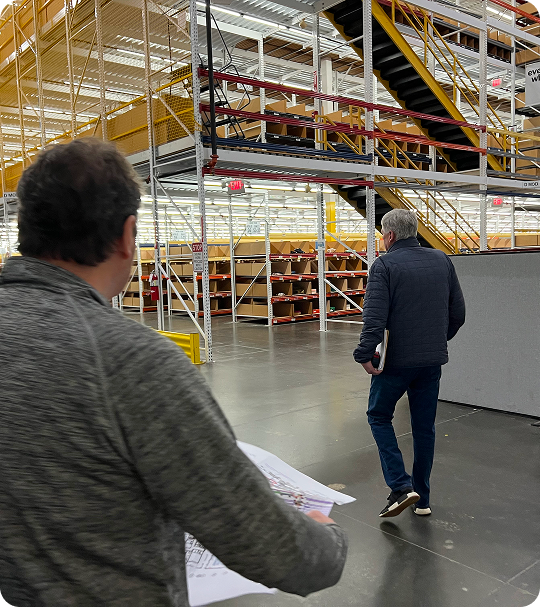
A multi-site needs assessment is not just a site audit repeated five times. The goal is to create a unified inventory of what you need across all locations, find the overlaps, and identify where standardization makes sense.
What to Inventory Per Site
- Upright frames: count, height, depth, capacity ratings
- Beams: count, length, load capacity per pair
- Wire decks, safety bars, column protectors
- Floor conditions, ceiling heights, aisle widths
- Pallet weight and dimensions for your product mix
The math scales predictably. If one location needs about 1,000 uprights and beams, five locations means roughly 5,000 total. Ten sites can push past 10,000. That volume is where bulk procurement strategies start paying off.
Velocity Mapping and Rack Type Selection
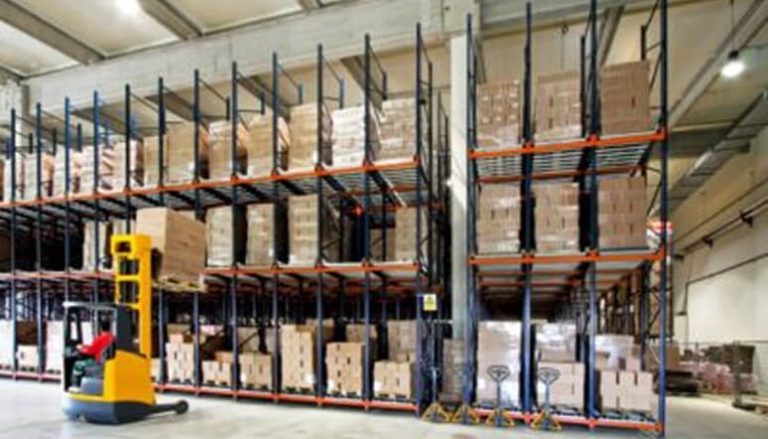
Not every site needs the same rack type. High-turnover SKUs belong on selective pallet racking where individual pallet access matters. Bulk storage with lower pick frequency fits drive-in racking. Odd-shaped or long items call for cantilever.
The key is mapping product velocity at each site and matching rack type to use case. Three locations with similar product profiles can standardize on one rack spec. Ten locations with regional product differences need a modular approach where the base specs stay consistent but configurations flex by site.
How Assessment Scales by Project Size
- 3 sites: Standardize specs across locations. CAD layouts and site visits are enough. A free assessment from a racking partner covers this.
- 5 sites: Add flow analysis to velocity mapping. Strategic sourcing kicks in because you are buying in volume.
- 10+ sites: Full lifecycle management. Pre-scan permits across jurisdictions. Modular spec planning to handle site-specific variances.
Used vs. New vs. Foreign: Picking Your Procurement Path
This decision drives your timeline, your budget, and your risk exposure. Here is how the three main options stack up.
Used Pallet Racking
- Lead time: 2-3 weeks
- Cost: 30-50% less than new domestic
- Best for: Multi-site rollouts where speed and savings matter most
Used racking is the fastest path to outfitting multiple facilities. The supply exists because companies close, downsize, and reconfigure warehouses constantly. A single large decommission project can produce thousands of uprights and beams, enough to supply several new site builds at once.
The tradeoff is flexibility on cosmetic condition and sometimes on exact specs. If you can work with minor paint scuffs or a slightly different beam color, the savings are significant. On a million-dollar project, 30% savings is $300,000 back in your operating budget.
New Domestic Racking
- Lead time: 4-8 weeks (can stretch to 18-20 weeks in tight markets)
- Cost: Full price, trending upward with steel costs
- Best for: Custom configurations or when specs must be exact
Steel prices have been climbing. The domestic manufacturing base is seeing increased demand. If you are planning 18 months out, new racking could cost 15% more by the time you order. That is the argument for early buying, even if you go with new.
Foreign-Made Racking
- Lead time: Variable, sometimes unpredictable
- Cost: Can be competitive, but tariff exposure adds risk
- Best for: Budget-driven projects with flexible timelines
After 2022, foreign-made racking from Vietnam and China flooded the market. Pricing dropped. That supply is still available, but tariff policy is shifting. If you go this route, price the tariff risk into your budget.
The Early Buy Strategy
The smartest move for multi-site procurement is buying early and storing. Lock in pricing before it climbs. Store the material at $4,000-$5,000 per month. When your facility is ready, the racking ships from storage instead of waiting on manufacturing lead times.
This works well when your sites launch in phases. Buy everything at once when the price is right. Deliver in stages as each location comes online.
The Phased Timeline: Planning Through Installation
A multi-site racking project runs in four overlapping stages. The timeline below assumes 3-10 sites.
Stage 1: Planning (Months 1-3)
- CAD layouts for each facility
- Product specs: pallet weight, aisle width, shelf levels, floor storage needs
- Identify rack types per site based on velocity mapping
- Coordinate with operations on phasing and launch order
Stage 2: Procurement (Months 4-6)
- Gather quotes for used, new domestic, and foreign options
- Execute early purchase if pricing is favorable
- Arrange storage for material that ships before facilities are ready
- Bulk source from decommission projects when available
Stage 3: Permitting (Runs Parallel to Procurement)
- Engineer-stamped drawings for each site
- Submit permit applications per jurisdiction
- Pre-gather facility data so applications move fast
- Critical rule: no inventory on racks during inspections. Time your go-live accordingly.
Stage 4: Execution (Month 7+)
- Staggered delivery to each site based on readiness
- Turnkey installation labor coordinated across locations
- Final inspections and sign-off
The real-world version of this is not always clean. One large decommission project can feed material to three or four new facility builds. A company closing a 700,000-square-foot distribution center generates enough uprights, beams, and equipment to stock several smaller sites. That kind of cross-project sourcing is where a single procurement partner adds the most value.
Logistics: Getting Racking Where It Needs to Go
Shipping racking across multiple states is not a small operation. A well-positioned partner with hub locations in key regions (Colorado, Arizona, California, New Jersey, Minnesota, Utah) can ship to all 50 states and keep freight costs predictable.
A few logistics realities to plan for:
- Live facility removal: You can pull racking out of a warehouse that is still operating. Forklifts running, product moving. It takes coordination, but it is standard practice for experienced crews.
- Storage as a buffer: If your site is not ready, racking sits in storage. This protects the material from weather and damage and gives you flexibility on launch timing.
- Spec mismatches: When you are sourcing used material across sites, spec differences are inevitable. Modular used racking solves most of these issues because components swap between brands and configurations.
Cost Modeling for Multi-Site Racking Projects
Racking project costs break down roughly like this:
- Materials: 50-70% of total project cost
- Installation labor: ~20%
- Permitting and engineering: ~10%
At 10 sites, using used racking instead of new can save $500,000 or more on a $1 million project budget. Storage costs of about $1,500 per month per site are easily offset by the price lock advantage.
Coordination savings add up too. When one partner handles permitting and installation across all locations, the per-site cost drops by roughly 15% compared to hiring separate contractors at each site.
Example: 10-Site Cost Comparison
| Cost Element | Per Site (Used) | 10-Site Total Savings |
| Uprights and Beams | $50,000 | $250,000+ |
| Install and Permits | $20,000 | ~15% less when coordinated |
| Storage | $1,500/month | Offset by price lock savings |
The ROI target for most multi-site projects is 12 months. A 25% increase in storage density across five sites can add 10,000 pallet positions. That is new revenue capacity without new real estate.
Common Pitfalls and How to Avoid Them
Siloed Vendors
Using a different racking vendor at each site means no one has the full picture. Specs drift. Timelines conflict. Costs go up because you cannot leverage volume. The fix: use a single procurement partner with national reach.
Permit Timing Mistakes
Permits take longer than most people expect, especially across multiple jurisdictions. The worst version of this is having racking installed and product loaded before the inspection happens. Inspectors will flag that. Pre-gather your facility data. Submit applications early. Keep racks empty until sign-off.
Skipping Used Racking Inspections
Not all used racking is the same quality. Condition matters. On-site inspection before purchase catches bent uprights, stress fractures, and missing components. A reputable buyer inspects and grades everything before offering it for resale.
Ignoring Market Timing
Racking markets move in cycles. After the post-2020 supply crunch, 2022-2023 brought a flood of used material onto the market as companies downsized. That created a buying opportunity. Steel prices are climbing again, and domestic manufacturing lead times are tightening. The window for favorable used pricing is open right now, but it does not stay open forever.
How Decommissions Feed Multi-Site Procurement
This is the part most companies miss. Facility decommissions create the supply that makes multi-site used procurement possible.
When a company closes a large distribution center, hundreds or thousands of uprights, beams, mezzanines, and ancillary equipment become available. A national racking buyer evaluates the material on-site, provides a value offer, and removes everything, sometimes while the facility is still operating.
That material then becomes available for companies launching new sites. The process:
- Facility sends photos and specs to the racking buyer
- Buyer evaluates condition, sizing, and market value
- Offer made: either a purchase price for the material or a net cost that credits material value against removal labor
- Removal crew handles teardown, loading, and shipping
- Material moves to storage or directly to the next buyer
A single 700,000-square-foot decommission can supply 500+ uprights to multiple sites. That is the procurement pipeline that powers multi-facility rollouts at 30-50% below new pricing.
Frequently Asked Questions
How do you coordinate pallet racking procurement across multiple warehouses?
Start with a unified needs assessment across all sites. Inventory uprights, beams, and specs at each location. Identify where you can standardize. Then source in bulk from a single partner who can procure, store, deliver, and install across all locations in a phased timeline.
How much can you save buying used racking for 5+ facilities?
Used racking typically costs 30-50% less than new domestic. On a 5-site project needing 5,000 uprights, that can translate to $250,000+ in savings on materials alone. Coordinated installation and permitting add another 15% in savings per site.
What is the typical timeline for a multi-site racking project?
Plan for 7-12 months from initial assessment to final installation. Planning takes 1-3 months. Procurement runs months 4-6. Permitting happens in parallel. Execution starts around month 7 with staggered deliveries to each site.
Can you store racking before a facility is ready?
Yes. Storage runs about $4,000-$5,000 per month. This lets you buy at favorable pricing and hold material until your site is ready for delivery and installation. It is a standard practice for phased multi-site rollouts.
How do you handle spec differences between warehouse locations?
At 3 sites, standardize as much as possible. At 10+ sites, use a modular approach where base specs stay consistent but configurations flex for site-specific needs like ceiling height, aisle width, or product weight differences.
What is the permitting process for pallet racking in a new warehouse?
You need engineer-stamped drawings submitted to the local jurisdiction. Lead times vary by city and county. The critical rule: do not load inventory onto racks before the inspection. Pre-gather your facility data and submit applications as early as possible to avoid holding up your launch.
How does a warehouse decommission create used racking inventory?
When a company closes or downsizes a facility, all the racking, mezzanines, conveyor, and equipment become available for resale. A national buyer evaluates the material, makes an offer, removes it, and either stores it or sells it directly to the next buyer. One large decommission can supply material for several new site builds.
What is the cost breakdown for a 10-site racking installation?
Materials make up 50-70% of the total cost, installation labor about 20%, and permitting and engineering about 10%. Using used racking across 10 sites can save $500,000 compared to buying new on a $1 million budget.
How do you inspect used pallet racking for quality?
On-site inspection before purchase. Check for bent uprights, stress fractures, weld integrity, and missing components. A reputable racking buyer grades all material before resale and provides condition documentation.
When should you buy used racking vs. new for a multi-facility rollout?
Buy used when speed and savings are the priority. Used ships in 2-3 weeks vs. 4-8 weeks for new. Buy new when you need exact custom specs or brand-new cosmetic condition. The best strategy for multi-site projects is often a mix: used for the base racking, new for specialty configurations.
What to Do Next
- Treat multi-site racking as one project, not five or ten separate ones
- Run a unified needs assessment across all locations before sourcing
- Price out used, new domestic, and foreign options side by side
- Buy early and store when pricing is favorable rather than waiting for each site to be ready
- Run permitting in parallel with procurement to avoid timeline bottlenecks
- Use a single procurement partner with national logistics for coordination savings
- Inspect all used material on-site before purchase
Conesco provides free multi-site assessments and manages the full lifecycle from procurement through installation. Request a consult to start planning your multi-facility racking project.

Ted Hodges - CEO & Founder
Ted Hodges is the Founder and CEO of Conesco Storage Systems, a company he started in 1986 to provide turnkey warehousing products and services, including the repurposing of quality, used material handling equipment. With over 40 employees across the country, Ted and his team serve customers of all sizes throughout the different stages of the warehousing lifecycle.