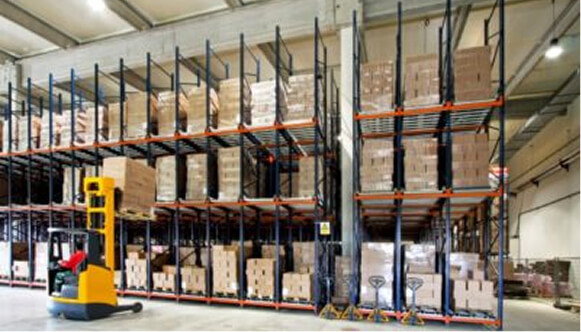
You’re staring at a quote for new pallet racking. The number makes you wince. Your facility needs the equipment, but the budget conversation with finance is going to hurt. Before you sign anything, you need to understand what used racking actually costs and whether it can work for your operation.
The price tag tells only part of the story.
The Real Price Gap Between New and Used Racking
Used pallet racking typically costs 30-60% less than new material. Sometimes the savings drop to 20-30% depending on market conditions and your flexibility on specifications.
Here’s what that looks like in real dollars.
A warehouse project requiring $1 million in new racking might cost $500,000 in used material. That’s $500,000 back in your budget. Even at the lower end, a 20% savings on that same $1 million project puts $200,000 back on the table.
That’s not pocket change. That’s ad spend. Inventory investment. Operational improvements. Marketing budgets.
The catch? You need some flexibility on minor specification details and overall material condition. If you need exact specs from a specific manufacturer, you’re locked into new. If you can work with quality used material that meets your load requirements and permit standards, the savings are real.
Lead Time Reality: When You Need It Yesterday
Price matters. Time matters more when you’re racing a lease deadline or trying to start revenue generation.
Used Material Timeline
Current market conditions put used racking delivery at 2-3 weeks when inventory is available and ready to ship. If Conesco has the material in stock or can source it from an active decommission, you’re looking at fast deployment.
New Material Timeline
Domestic manufacturers currently run 4-8 weeks for standard orders. Some specialty items stretch longer. Compare that to COVID-era nightmares when new racking hit 18-20 week lead times. The market has stabilized, but you’re still waiting 4-8 weeks minimum.
The Business Impact
Every week your facility sits empty costs money. Holding costs add up. Lease payments continue. Revenue generation sits on pause.
Faster deployment means earlier revenue. Getting racking installed in 2-3 weeks instead of 8 weeks can make or break a project timeline. When you’re trying to launch before Q4 or beat a lease expiration, those 5-6 weeks matter.
What Market Conditions Actually Mean for Your Budget
The pallet racking market moves in cycles. Understanding where we are right now helps you time your purchase and negotiate better pricing.
The 2020-2024 Case Study
Let’s walk through what happened.
2020-2021 was chaos. Everyone wanted racking immediately. Specs didn’t matter. People bought whatever they could get. Domestic steel prices jumped. Foreign-made racking imports dropped. Lead times stretched to 18-20 weeks.
Then 2022-2023 flipped the script.
Foreign racking flooded the market from China and Vietnam. Companies with COVID-era over-supply started downsizing. The selling market got competitive. Used material became abundant.
By 2024, the pattern shifted again. Nine out of ten project inquiries were companies looking to decommission or sell material. Demand existed but felt inconsistent. Hot one month, cold the next.
Current Market Predictions
Steel prices are trending up. The focus on US-made steel is pushing domestic production. Lead times remain healthy at 4-8 weeks. Industry experts predict a 15% price increase on new racking within 18 months.
Budget constraints are making companies more selective about which projects get funded. Tariff uncertainty has finance departments holding tighter control. The Q4 budget-flush projects that used to be common? Less frequent in 2024.
Companies that can procure now and lock in current pricing will avoid that 15% bump. Waiting 18 months means paying more for the same material.
Decision Framework: When Each Option Makes Sense
Not every project fits used racking. Not every project needs the premium cost of new material.
Choose Used When:
You have flexibility on minor specification details. Your facility can work with quality material that might not be from your preferred brand. You need faster deployment in that 2-3 week window. Budget savings of 30-60% make a meaningful difference to your project approval. The current supply in your region is strong (California has high availability right now).
Choose New When:
You need specific brand specifications for uniformity across multiple facilities. Your operation requires exact matches to existing systems. The facility represents a long-term strategic investment where premium material makes sense. Your budget accommodates new pricing without strain.
Who Actually Buys What
Major operations like Amazon, Walmart, Target, and Pepsi consider both options. The deciding factor? Price. When the cost savings talk loud enough, even large companies choose used.
Everyone has a price point where used makes sense.
Multi-Location Procurement Strategy
Planning a rollout across multiple facilities changes the procurement game entirely.
Strategic Planning Example
You’re launching five facilities over 18 months. Each facility needs roughly 1,000 uprights plus corresponding beams. Total requirement: 5,000 uprights across all locations.
Now you have options.
Domestic manufacturers offer one price tier. Foreign producers from Vietnam or China offer different pricing. Used material procurement can deliver 30-50% savings. You can even mix approaches across different facilities based on each location’s specific needs.
Storage Between Projects
Here’s where it gets interesting.
You can procure used material now at current pricing and store it for $4,000-5,000 per month. Hold it for three months until your Seattle, Las Vegas, or Dallas facility is ready for installation. You avoid rush pricing. You lock in availability. You control timing.
The math works when you’re avoiding that 15% price increase projected over 18 months. Storage costs for three months ($12,000-15,000) get absorbed by the savings on delayed price increases.
Planning Advantages
When you know your general warehouse layout (receiving area, case storage, pallet storage, picking zones, shipping), you can procure well in advance. Product weights are known. Storage methods are established. You’re not guessing at requirements.
Procurement 18 months ahead of installation locks in today’s pricing while you plan permitting, layout design, and installation scheduling.
Budget and ROI Thinking
The $200,000 you save on used versus new racking doesn’t vanish. It reallocates.
That money funds marketing campaigns. Inventory expansion. Operational improvements. Technology upgrades. The material line item shrinks, but installation labor and permitting costs stay the same regardless of new or used.
Total project cost thinking means looking at where you can create savings without compromising the installation quality or permit compliance.
Tariff and Steel Price Impacts
US-made steel demand is increasing. Foreign tariffs affect import pricing. Companies buying now avoid the projected 15% increase coming in 18 months.
Waiting costs money when steel prices are climbing.
Quality and Condition Assessment
Not all used racking is created equal.
Projects get rated on a scale. A 7/10 facility might have good racking but limited quantity. An 8/10 or 9/10 facility offers better material value. A 10/10 is rare but represents ideal condition and quantity.
What Affects Value:
- Square footage of the source facility
- Type and brand of racking system
- Current condition and age of materials
- Availability of ancillary equipment (mezzanines, conveyors)
- Whether material can be removed or stays in building
Larger facilities (700,000 to 1 million square feet) provide more material volume and better economies of scale on decommissioning projects.
Common Pitfalls and Timing Issues
Budget uncertainty kills projects.
Companies hold budgets tight when tariffs and economic conditions feel unstable. What looked like an approved project in September gets shelved by November. Operational issues eat budget that was allocated for racking. Mid-project reallocation happens.
The “we’re ready to proceed” conversation turns into “actually, we’re going to hold off” faster than you’d expect.
Specification Flexibility Concerns
Some operations need exact specifications. Period. They can’t compromise on brand or specs for legitimate operational reasons. Used won’t work.
Others have flexibility. If the load ratings work, the dimensions fit, and the permitting clears, they’ll take the 30-60% savings.
Know which category your facility falls into before you start procurement conversations.

Ted Hodges - CEO & Founder
Ted Hodges is the Founder and CEO of Conesco Storage Systems, a company he started in 1986 to provide turnkey warehousing products and services, including the repurposing of quality, used material handling equipment. With over 40 employees across the country, Ted and his team serve customers of all sizes throughout the different stages of the warehousing lifecycle.