The used pallet racking market outlook for 2026 comes down to three pressures hitting at the same time: rising steel tariffs, accelerating ecommerce volume, and tighter capital budgets. Global pallet racking markets are projected to grow at 7 to 10 percent annually through 2030, with some analysts forecasting revenues between $14 billion and $21 billion by the end of the decade. The broader pallet market backs this up, expanding from roughly $72.9 billion in 2022 to a projected $127.6 billion by 2030.
That is a lot of money chasing new steel. And for VPs of Operations and Supply Chain leaders at mid-to-large distribution centers, the math is starting to look different. Used racking is moving from a cost-saving tactic to a core part of how teams plan, budget, and execute storage projects in a volatile market.
Tariff Impacts on New vs. Used Racking
Steel tariffs and import duties have made new racking pricing unpredictable. When duties shift, new system quotes can swing 10 to 20 percent in a matter of weeks. For operators planning large projects with 6-to-12-month lead times, that turns every purchase order into a budgeting risk.
Recent pallet racking market reports flag steel cost inflation and capital cost pressure as ongoing risks alongside the ecommerce-driven demand. That combination puts procurement teams in a bind. The project timeline says order now. The budget says wait.
How Much Does Pallet Racking Cost? New, Used, and Installation Pricing
The Dual-Quote Trend
More procurement teams are running what the industry calls “dual quotes” on every major racking project. They spec both new and used systems side by side, comparing cost, lead time, and capacity. This was unusual three years ago. In 2026, it is becoming standard practice for any project above a few thousand pallet positions.
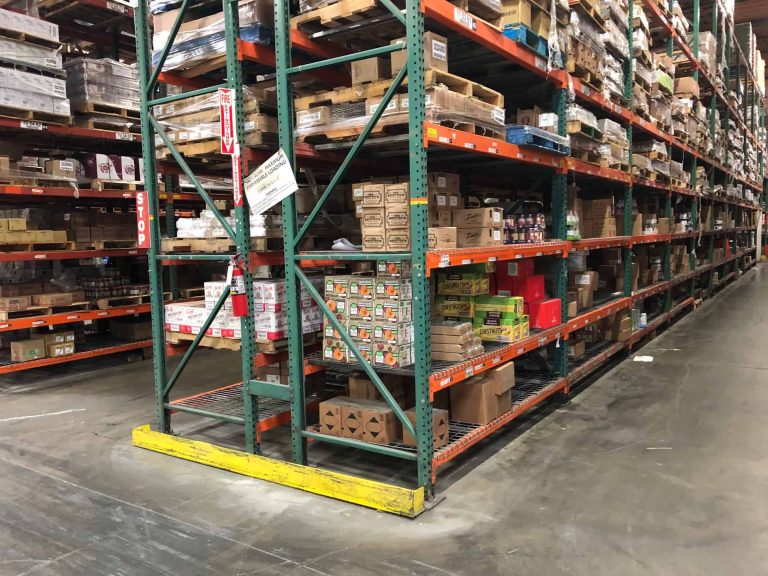
Used racking sourced from facility decommissions or consolidations decouples your project from steel price volatility. These systems can price significantly below new while still meeting capacity, seismic, and safety requirements. And they can be re-stamped and engineered to local building codes, so you are not compromising on compliance.
Why “Fixed Lease, Floating Racking Cost” Is a Problem
Most warehouse leases lock in rates for 3 to 10 years. Your rent is fixed. Your labor plan is fixed. But if your racking cost floats with steel tariffs, you have an uncontrolled variable sitting inside a controlled budget. That is a risk most finance teams will not accept once they see it spelled out.
Used racking gives you a way to lock in a known cost at the time of purchase, without waiting months to see where new steel pricing lands.
E-Commerce Growth Demands Scalable Storage
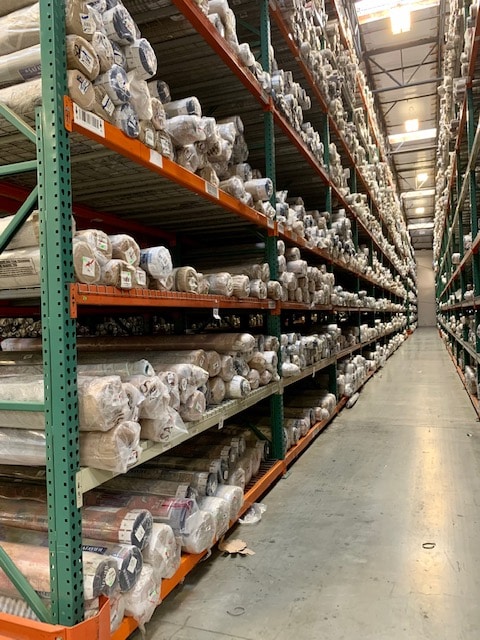
U.S. ecommerce sales are forecast to reach roughly $1.8 trillion by 2030, representing close to a third of all retail. That means more SKUs per facility, more safety stock, and relentless pressure on cube utilization. Every fulfillment center and 3PL is fighting the same battle: get more pallet positions into the same footprint without breaking the operation.
Running Out of Air, Not Floor
Operations leaders in large DCs talk about this constantly. The ceiling height is there. The floor space exists. But the racking budget or lead time is not keeping up. Teams are trying to add density without blowing up travel paths, safety clearances, or WMS logic. That is a real constraint, and it gets worse as ecommerce order profiles keep shifting toward smaller, faster picks.
Used selective and push-back systems let operators bolt on capacity for new fulfillment nodes or seasonal surges quickly. No factory queue. No top-of-market steel pricing. You source the racking, get it engineered, and install it in a fraction of the time a new system would take.
Seasonal Surges Without Permanent CapEx
Peak season capacity is a recurring headache. You need the pallet positions in Q4, but you do not want to carry that capital cost for the full year. Used racking makes it financially feasible to add temporary or semi-permanent capacity for surge periods. If volumes hold, you keep it. If they do not, you can reconfigure or decommission without the sunk cost of a brand-new system.
Market Data and Projections
Independent analysts are broadly aligned on the trajectory. One global report pegs pallet racking market growth at about 7.1 percent CAGR through 2030, with market size expected to approach roughly $14.75 billion by the end of the decade. Another analysis projects revenues rising toward $18.1 billion by 2028 at a 9.9 percent CAGR, driven by ecommerce, automation, and globalized supply chains.
Broader pallet and warehouse racking markets show similar mid-single to high-single-digit annual growth.
What This Means for Used Racking
When the new racking market grows this fast, two things happen. First, more new facilities go up, creating future decommission inventory as companies consolidate or relocate. Second, demand pressure on new systems drives up prices and extends lead times, which pushes more buyers toward used.
The used racking market feeds on both sides of this cycle. Growth creates supply through decommissions. Price and lead time pressure create demand. That is why 2026 looks like a turning point for operators who have been treating used racking as a backup option.
Regional Inventory Edges: Texas and Minnesota
Pallet racking market reports highlight North America as a key growth region, with ecommerce and 3PL networks pushing more distribution nodes into Texas and the Upper Midwest. Those two markets are seeing heavy activity right now.
Texas: 3PL Expansion and Fulfillment Growth
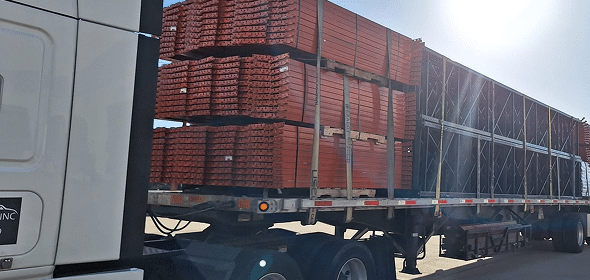
Dallas, Houston, and San Antonio are absorbing new 3PL facilities at a rapid clip. Conesco’s regional yard in Texas shortens freight lanes significantly compared to buying from a single distant national supplier. That cuts both freight cost and project timelines for large installations. One example: a 3PL in Dallas added selective and push-back racking within 90 days by sourcing regionally.
Minnesota: Cold Storage and Upper Midwest Logistics
Minnesota is a hub for cold-storage retrofits and food distribution. Access to in-region used inventory and local installation crews reduces risk around schedule, permits, and labor. A cold-storage operator in Minnesota recently re-racked an entire zone with used structural uprights, cutting project cost and compressing the install timeline.
For operators in either market, regional sourcing is not just a freight savings play. It is a schedule play. When you can source, engineer, and install from a nearby yard, you take weeks off the project timeline.
Operator Reality: What Teams Actually Complain About
Talk to warehouse operations managers and you hear the same pain points repeated. Throughput and safety start to slip once facility occupancy pushes past 80 to 85 percent. Travel paths narrow. Ad-hoc storage creeps in. Pallets end up in aisles “just for this week,” and that week becomes a month.
The Red Flags
- Pallets stored in aisles or staging areas that were not designed for storage
- Safety inspections falling behind because growth has outpaced engineering reviews
- Pick paths getting longer as ad-hoc storage blocks planned travel routes
- Capital approval delays for new buildings while storage pressure keeps building
Safety professionals warn about overloaded or damaged racks when growth outpaces inspection cycles. And many teams are stuck between two bad options: wait for capital approval on a new building, or keep cramming product into a facility that has already hit its practical limit.
Used racking and reconfiguration sit right in the middle. You can add capacity, restore safe clearances, and buy time while the longer-term real estate decision plays out. It is not a permanent fix for every situation, but it is a practical one.
Conesco’s 2026 Playbook
So what should an operator do with all this information?
Start by running a used-vs.-new comparison on your next racking project. Not as a formality, but as a real evaluation. Get engineering specs, lead times, and installed costs side by side. For most large projects, the numbers will surprise you.
Conesco can deliver turnkey projects from start to finish: engineering, permitting support, sourcing from regional yards in Texas and Minnesota, installation, and future decommissioning. The goal is to compress the full lifecycle cost of storage, not just the upfront purchase price.
If you are managing a facility over 100,000 square feet or carrying more than 10,000 pallet positions, it is worth getting a second set of eyes on your storage plan. Conesco offers storage audits that focus on used-vs.-new mix, regional inventory options, and decommission opportunities.
Treat used racking as a strategic hedge against steel volatility and project delays. Not a discount option. A planning tool.
Frequently Asked Questions
What is driving pallet racking prices up in 2026?
Steel tariffs, import duties, and strong demand from ecommerce and 3PL expansion are all pushing new racking prices higher. Lead times of 6 to 12 months on new systems add to the cost pressure, since prices can shift during the wait.
How big is the pallet racking market?
Independent analysts project the global pallet racking market to reach between $14.75 billion and $18.1 billion by the end of the decade, growing at 7 to 10 percent annually. North America is one of the largest regional markets.
Is used pallet racking safe and code-compliant?
Yes. Used racking can be inspected, re-stamped, and engineered to meet local seismic and building codes. Reputable suppliers like Conesco verify structural integrity and capacity ratings before selling used systems.
How much can you save with used racking compared to new?
Savings vary by system type and condition, but used racking typically prices significantly below new. The exact gap depends on steel market conditions, system configuration, and regional availability. Running a dual quote on your next project is the fastest way to see the difference.
What types of used racking work for ecommerce fulfillment?
Used selective racking and push-back systems are the most common for ecommerce and fulfillment operations. Selective racking gives you direct access to every pallet position, which suits high-SKU, fast-pick environments. Push-back adds density for slower-moving inventory.
How fast can used racking be installed?
Timelines depend on project size and engineering requirements. Regional sourcing can cut weeks off the schedule compared to ordering new. Some projects, like the Dallas 3PL example, have been completed within 90 days from sourcing to installation.
Does Conesco have racking inventory in Texas and Minnesota?
Yes. Conesco operates regional yards in both Texas and Minnesota, which shortens freight lanes and project timelines for operators in those markets and surrounding states.
Can used racking be engineered to match my existing system?
In most cases, yes. Used racking can be configured, modified, and engineered to integrate with existing layouts. A qualified supplier will verify compatibility with your current system specs, load requirements, and building codes.
Is used racking just a short-term fix?
No. Many operators use reconditioned racking as a long-term storage solution. The steel in pallet racking has a long useful life when properly maintained and inspected. Used racking is increasingly treated as a strategic planning tool, not a stopgap.
What should I look for in a used racking supplier?
Look for engineering capability, regional inventory, installation services, and experience with permitting. A supplier that can handle the full lifecycle, from sourcing to decommissioning, will compress your project timeline and reduce risk.
Key Takeaways
- Run a dual quote (new and used) on every racking project above a few thousand pallet positions. Make it standard practice, not an afterthought.
- Factor steel tariff volatility into your racking budget. A fixed racking cost beats a floating one when your lease and labor are already locked.
- Source regionally when possible. Yards in Texas and Minnesota cut freight costs and take weeks off project timelines.
- Watch your occupancy rate. If you are above 80 to 85 percent, throughput and safety are already taking a hit. Act before ad-hoc storage becomes the norm.
- Treat used racking as a strategic hedge, not a discount option. It gives you speed, cost control, and flexibility that new-only procurement cannot match.
- Get a storage audit if your facility is at capacity or approaching it. A second set of eyes on your pallet positions can reveal options you have not considered.

Ted Hodges - CEO & Founder
Ted Hodges is the Founder and CEO of Conesco Storage Systems, a company he started in 1986 to provide turnkey warehousing products and services, including the repurposing of quality, used material handling equipment. With over 40 employees across the country, Ted and his team serve customers of all sizes throughout the different stages of the warehousing lifecycle.