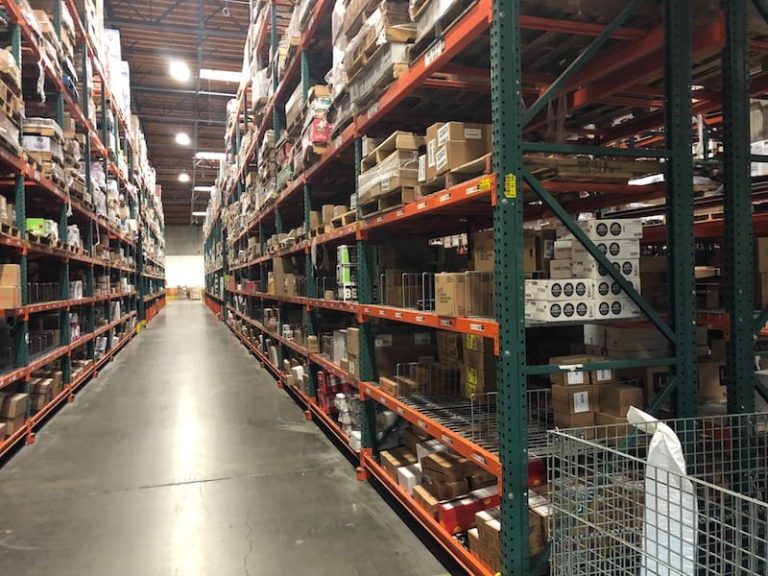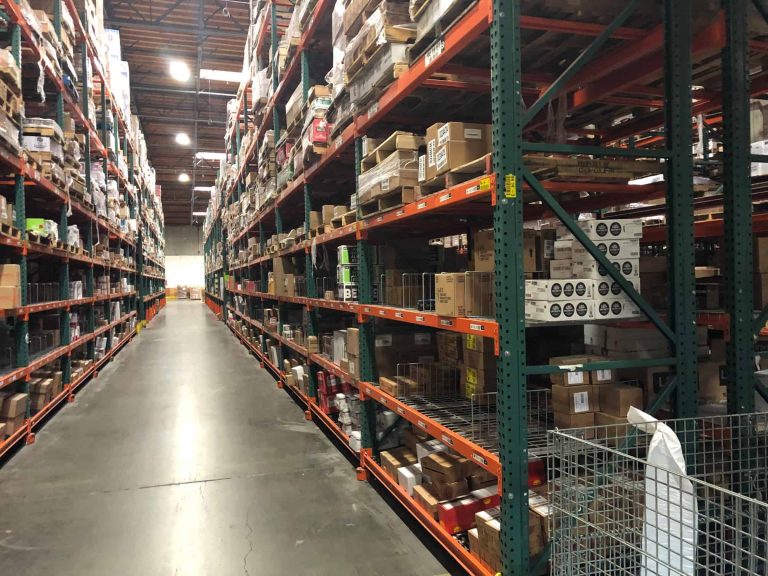
The difference between choosing used or new pallet racking can mean $500,000 in your budget. That’s not a hypothetical number. It’s the actual cost gap companies face when outfitting a warehouse facility.
Most buyers assume new is always better. The decision depends on your timeline, flexibility on specifications, and current market conditions. Understanding when to choose each option requires looking at more than just the price tag.
The Real Cost Difference Between Used and New Racking
Used pallet racking typically costs 50-60% less than new materials. For a project with a $1 million new price tag, you’re looking at $500,000 for comparable used materials. That $500,000 difference becomes budget you can reallocate to operations, inventory, or marketing.
The savings range isn’t fixed. It fluctuates between 20-60% depending on supply availability and how flexible you are on specifications.
Think about what $200,000 in savings means for your operation. That’s ad spend. Marketing budget. Inventory capital. Operations improvements.
Lead Time Realities: Where Used Racking Wins
Speed matters when you need to get a facility operational. Used racking typically arrives in 2-3 weeks. New racking currently runs 4-8 weeks for standard configurations, longer for specialty items.
Those timelines shift with market conditions.
During 2020-2021, new domestic racking lead times stretched to 18-20 weeks. Companies needed material immediately. They didn’t care if the racking didn’t match their specs perfectly. They wanted it operational yesterday. Used racking’s 2-3 week timeline became the only viable option for urgent projects.
Current lead times have normalized to 4-8 weeks for new racking. That’s manageable for planned expansions. But if you’re racing against a lease deadline or need to capitalize on a sudden inventory surge, those extra weeks matter.
Supply and Demand Cycles You Need to Understand
The pallet racking market swings based on economic conditions, steel prices, and warehouse activity levels.
The 2020-2021 Period
Demand exploded. Domestic steel prices increased. Foreign-made racking from China and Vietnam saw reduced imports. Lead times for new domestic racking hit 18-20 weeks.
Used material was scarce. The few decommissioning opportunities that existed were highly competitive with inflated pricing.
The 2022-2023 Shift
The market flipped. Foreign materials flooded in from China and Vietnam. Companies that had over-expanded suddenly had excess inventory and oversized facilities. They needed to downsize.
Leads shifted from “we need to buy” to “we need to sell.” By 2024, nine out of ten incoming leads were from companies looking to decommission facilities, exit leases, or sell surplus materials.
Current Market Conditions
The market is transitional. There’s still significant used material available, particularly in regions like California. But demand is starting to pick back up.
Tariff uncertainty has created spending hesitancy. Companies that historically committed to end-of-year projects to use remaining budget are holding back. They’re being more selective. More cautious.
Steel prices are increasing again. New racking could cost 15% more in 18 months. That timeline pressure may accelerate buying decisions for companies that see the price trajectory.
Lead times remain at 4-8 weeks. But that could change if demand surges and manufacturing capacity tightens.
When New Racking Makes Sense
New racking delivers exact specifications with no compromise. Custom heights, specific load capacities, particular beam configurations.
The material arrives in consistent condition. No concerns about previous damage or overloading.
If your timeline allows for the 4-8 week lead time and your budget accounts for the full cost, new racking delivers exactly what you specified.
When Used Racking Delivers Better Value
Used racking works when you have flexibility on specifications. Maybe your ideal configuration is close but not exact. That flexibility unlocks the 50-60% savings range.
For warehouse decommissioning scenarios, you can acquire material at steep discounts. A 400,000 to 1,000,000 square foot facility decommission might yield 2,000+ uprights plus miscellaneous materials.
Projects with tight timelines benefit from used material availability. The material exists and can be delivered in 2-3 weeks.
Companies looking to maximize budget efficiency choose used when the condition is acceptable and specs are close enough. That $200,000-500,000 in savings represents real operational capital.
The Flexibility Factor
Choosing used racking requires accepting certain trade-offs. You might not get your exact preferred specifications. The condition will vary.
You need to evaluate what flexibility means for your operation. Can your facility layout accommodate slightly different configurations?
The companies that realize maximum savings from used racking are those willing to be flexible on details while maintaining requirements on safety and load capacity.
How Large Decommissioning Projects Work
Major facility decommissions create unique opportunities. When a company closes a 500,000 square foot warehouse, they’re liquidating massive material volumes.
These projects generate inventory that enables smaller orders. A decommissioning might produce 2,000 uprights. That volume allows fulfillment of smaller orders that wouldn’t otherwise be viable. Someone needing four uprights and eight beams for a small facility can get served from that larger inventory base.
Large decommissions don’t happen on predictable schedules. They’re driven by lease expirations, company consolidations, or market downturns.
When they do happen, pricing can be exceptional. Sellers need the material removed. They’re motivated by facility clearance timelines, not maximizing material value.
Geographic Considerations for Used Racking
Location matters for used racking purchases. You need inventory available in your region or you’re paying transport costs.
Markets like California currently have high availability of used materials. Other regions might have limited options.
Without a large local decommission creating inventory, smaller orders become difficult to fulfill economically. For example, fulfilling an order for four uprights and eight beams in Texas isn’t viable without a local facility or large decommission providing the inventory base.
Steel Prices and Market Impacts
New racking costs are directly tied to steel prices. When domestic steel prices increase, new racking costs rise proportionally.
Current tariff discussions create uncertainty in pricing. Companies don’t know if costs will jump based on trade policy changes. That uncertainty makes budgeting difficult.
The forecast suggests 15% higher costs for new racking within 18 months.
Foreign-made racking from China and Vietnam offers different pricing but comes with its own considerations. Domestic manufacturers have different lead time profiles.
What the Next 6-9 Months Look Like
Current indicators suggest increasing demand. Companies that delayed projects due to economic uncertainty are starting to move forward.
Budget constraints remain tighter than historical patterns. The typical Q4 rush to spend remaining budget and complete projects before year-end was muted in 2024. Companies are being more selective about which projects get approved.
The hesitancy around tariffs is real. Businesses don’t want to commit to major capital expenditures if trade policy could significantly impact their costs.
As steel prices increase and lead times potentially extend with higher demand, the calculus shifts. Companies may accelerate buying decisions to lock in current pricing before projected increases hit.
Used material availability remains strong, particularly from companies still downsizing or consolidating facilities.
The Questions You Need to Answer First
Before committing to either new or used racking, answer these questions about your operation:
How many SKUs are you managing? What are your pallet sizes and specifications? How fast are you turning through inventory? Do you need carton storage, pallet storage, or individual item shelving?
These questions inform the racking configuration that actually serves your operation.
Facility height matters. If you have 30-foot clear height, you should maximize vertical storage. A 100,000 square foot facility with proper vertical racking stores significantly more than one with low-bay configurations.
Understanding your SKU turnover rates tells you what storage density you need.
How much inventory data do you have? How many SKUs go out at once? These details shape your material requirements.
The Consultation Value Beyond the Sale
Free consultation on your warehouse needs builds the relationship before you’re ready to buy racking.
When someone asks about inventory management or warehouse optimization, that conversation happens even if it doesn’t generate immediate revenue. You provide the information. You explain the trade-offs. You discuss what works and what doesn’t.
Then when that person is ready for a racking project, they remember who helped them think through their facility needs. They remember the consultant who explained that going new costs $1,000,000 but going used costs $500,000 and provided options between those endpoints.
That goodwill consultation turns into the racking sale later.
Frequently Asked Questions
Can I buy used pallet racking in small quantities?
Small quantity purchases depend on available inventory. If a supplier has material from a large decommissioning project, they can fulfill smaller orders like four uprights and eight beams. Without that inventory base, small orders become difficult to fulfill economically. Your best opportunity for small quantities is when a major facility decommission creates surplus inventory in your region.
How long does it take to get used racking delivered compared to new?
Used racking typically delivers in 2-3 weeks. New racking currently runs 4-8 weeks for standard configurations, potentially longer for specialty items. During high-demand periods like 2020-2021, new racking lead times stretched to 18-20 weeks while used maintained the 2-3 week window.
What happens to pricing if the market shifts while I’m planning my project?
Used racking pricing responds to supply and demand. When decommissioning activity is high and buying activity is low, prices favor buyers. When demand surges and supply tightens, prices increase. New racking prices respond to steel costs and tariffs. Current forecasts suggest 15% higher new racking costs within 18 months.
Why does geographic location matter for used racking purchases?
You need inventory available in your region or you’re paying transport costs that can erode your savings. Markets like California currently have high availability of used materials. Other regions have limited options. Without a large local decommission creating inventory, smaller orders become economically challenging. For example, fulfilling a small order in Texas requires either a local facility with inventory or a major decommission in that region.
How does the buy vs. sell lead ratio indicate market conditions?
The ratio of companies looking to buy versus sell racking shows market health. During the 2020-2021 expansion period, almost all leads were buyers. By 2024, nine out of ten leads were from companies looking to sell, decommission facilities, exit leases, or downsize. This shift indicates market correction and creates opportunities for buyers to source used materials.
What role do tariffs play in racking purchase decisions?
Tariff uncertainty creates hesitancy in spending. Companies don’t know if costs will increase significantly based on trade policy changes. This makes budgeting difficult and causes delays in project approval. Foreign-made racking from China and Vietnam has different tariff exposure than domestic materials. Current uncertainty has muted typical end-of-year budget spending patterns.
How do facility decommissions create small order opportunities?
A single large decommission of a 400,000 to 1,000,000 square foot facility can yield 2,000+ uprights. This creates inventory volume that enables smaller orders. Without that decommission inventory, fulfilling an order for just a few uprights and beams isn’t economically viable. The large project creates the inventory base for smaller sales.
What’s the typical savings range for used racking?
Used racking typically costs 50-60% less than new materials. The range can vary from 20-60% depending on market supply and how flexible you are on specifications. A project that costs $1,000,000 in new materials might cost $500,000 in used materials. Even at the lower end, savings of $200,000 represent significant capital for other operational needs.
Key Takeaways
The cost difference is substantial and real. Used racking saves 50-60% compared to new, translating to $200,000-500,000 in capital you can deploy elsewhere in your operation.
Lead times favor used materials. The 2-3 week delivery window for used racking beats the 4-8 week timeline for new, and that gap widens dramatically during high-demand periods when new can stretch to 18-20 weeks.
Market conditions are shifting toward buyer opportunity. Nine out of ten leads in 2024 were companies looking to sell or decommission, creating abundant used material supply while demand is starting to increase.
Steel price increases create decision pressure. The forecast of 15% higher costs for new racking within 18 months means current pricing may be the lowest available for several years.
Geographic inventory availability determines viability. Without local decommission projects creating regional inventory, used racking becomes economically challenging for smaller orders due to transport costs.
Flexibility on specifications unlocks maximum savings. Companies willing to accept close-but-not-exact configurations realize the full 50-60% cost advantage while those requiring precise specs need new materials.
Large decommissions enable small purchases. A single 400,000-1,000,000 square foot facility closure yielding 2,000+ uprights creates the inventory base that makes fulfilling small orders economically viable.

Ted Hodges - CEO & Founder
Ted Hodges is the Founder and CEO of Conesco Storage Systems, a company he started in 1986 to provide turnkey warehousing products and services, including the repurposing of quality, used material handling equipment. With over 40 employees across the country, Ted and his team serve customers of all sizes throughout the different stages of the warehousing lifecycle.